
Crosquiel Cloud Accounting for Business
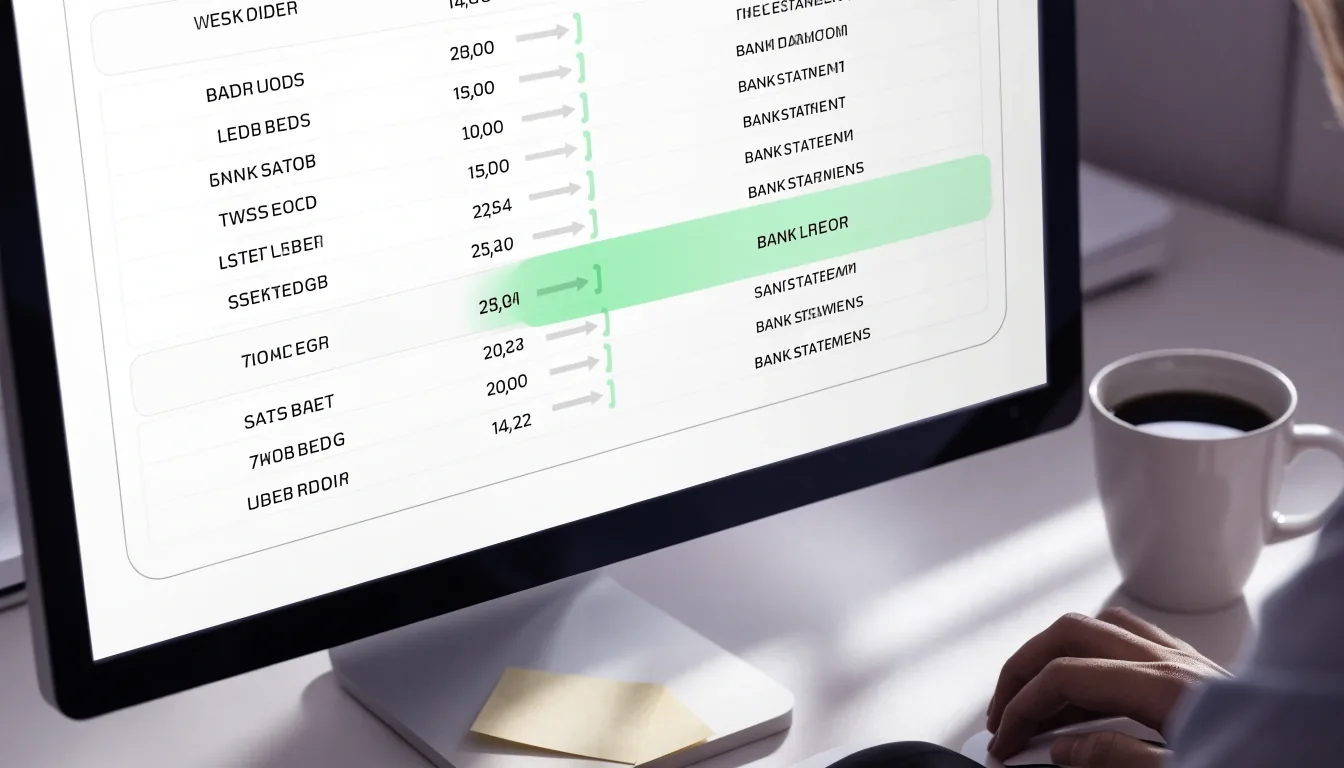
A bookkeeper's screen shows a bank reconciliation with matched rows highlighted green and a few unmatched entries.

Crosquiel · Seoul

How does cloud accounting actually work?

Cloud accounting moves your books into a hosted system where ledger, invoices, bank data, and reports stay connected. This guide walks each part in order — chart of accounts to financial close — for SME owners and staff in South Korea who want steady, reviewable books.

The path of the books

Five moves every Korean SME runs, in this order.

  1. 01
    Set a chart of accounts you can keep

    Your ledger's categories — short enough to use daily, detailed enough for VAT and management review.

  2. 02
    Run payables with clear approvals

    Supplier bill to matched bank line — with a sign-off that stops the year-end scramble.

  3. 03
    Run receivables to get paid on time

    Invoice out, receipt in, tie every payment to its original document.

  4. 04
    Review bank feeds every week

    Match, classify, leave a note on exceptions — and keep month-end small.

  5. 05
    Close the month in the same order

    Review balances, post adjustments, lock the period, hand the reports out.

A Korean tax invoice with a red seal lies beside an open ledger and a pen on a pale oak desk.

Chapter one

Set a chart of accounts you can keep.

The chart of accounts is the list of categories your ledger uses. Keep it short enough to use daily and detailed enough for VAT and management review. Separate sales, purchases, payroll, and asset accounts clearly. Review it with your accountant before migration, especially if you handle both domestic sales and export.

A workable starting set for a Korean SME usually runs twenty to thirty accounts, not three hundred. Split by what a reviewer will need at close: revenue by channel, cost of sales, payroll and its tax withholdings, VAT input and output, and a small fixed-asset block. Anything finer usually goes into a memo, not a new account — the chart grows on demand, not on speculation.

Running the day

Three loops run in parallel — payables, receivables, bank feeds.

02

Run payables with clear approvals

Accounts payable starts when a supplier bill arrives. Record it, assign an approver, schedule payment, then match the bank line on payment. Small teams in Seoul often skip the approval step and regret it at close.

A simple limit table by amount and role prevents most errors: a small bill approves at the desk, a mid-size one with the team lead, anything above the band with the owner or controller. The rule is not bureaucracy — it is what lets a stranger trace why a payment left the account.

03

Run receivables to get paid on time

Accounts receivable starts with a clear invoice and ends with a matched receipt. Billing-first tools built around invoicing and service workflows help small teams stay consistent.

Send invoices promptly, track views and due dates, and follow up on a fixed schedule. Tie every receipt to the original invoice before reconciliation — a payment that cannot name the invoice it settles is the start of an aging surprise two months later.

04

Review bank feeds every week

A bank feed brings transactions in for human review. Match each line to an invoice, bill, or expense category, and leave a note on exceptions. Weekly review keeps the month-end load small.

For Korean accounts, pay attention to transfer memos and fee lines that automation may misread — a memo typed in shorthand, a fee swept on the same day as the deposit. Flag anything you cannot classify today and clear it before the week ends.

What good looks like

The five loops, scored against the Korean tax realities they meet each month.

The five loops

  1. 01Chart of accounts
  2. 02Payables
  3. 03Receivables
  4. 04Bank feeds
  5. 05Month-end close

The habits above are the minimum for a reviewable set of books. Add as much detail as your accountant asks for; drop anything you cannot keep up with each month.

01 · Chart of accounts

Domestic sales and export lines coded separately for VAT treatment.

Quarterly sweep for unused accounts · Owner + accountant

02 · Payables

Tax invoices with the supplier's seal and the correct VAT code.

Match bank line to the bill before it ages · Approver per limit table

03 · Receivables

Cash receipts with e-tax invoice numbers already issued.

Aging review on a fixed day each week · Billing owner

04 · Bank feeds

Transfer memos in shorthand, fee lines on the same day as deposits.

Every line classified before the week ends · Bookkeeper

05 · Month-end close

VAT-coded transactions reviewed before the period locks.

Same checklist, same order, every month · Controller + owner

Two colleagues finish a month-end close side by side at night, a checklist on the monitor and a printed trial balance on the desk.

Chapter five

Close the month in the same order, every time.

Financial close means reviewing balances, posting adjustments, and locking the period. Check payables and receivables aging, reconcile bank accounts, review VAT-coded transactions, then issue profit and loss and balance sheet reports. Keep sign-off names and dates on file.

Repeatability matters more than speed. A close that always takes the same shape — same checklist, same order, same people — is one a reviewer can trust without re-deriving the process from scratch. Write the date and the name on the file; the record is the point.

Close checklist

  • Payables and receivables aging reviewed
  • Bank accounts reconciled, exceptions noted
  • VAT-coded transactions sanity-checked
  • Adjustments posted and reasons logged
  • Period locked, P&L and balance sheet issued
  • Sign-off names and dates on file

Before you migrate

Two questions SME owners ask before they move their books.

The software keeps records organized. People still make the calls on treatment, VAT logic, and year-end. Get that split clear before the pilot, and the rest of the migration gets easier.

Do I still need an accountant if I use cloud accounting?

Yes — for review, VAT logic, and year-end work. The software keeps records organized, while a person confirms treatment and compliance. In Korea that usually means an outside accountant or your in-house finance lead own the calls, and the cloud system gives them a clean record to work from.

How long does migration take for a small business?

Timing depends on history cleanup and opening balances. Many SMEs complete a pilot in a few weeks when supplier and customer records are already tidy. Bring the last two closed periods, the current chart of accounts, and a list of open AP/AR — that set is what shortens the pilot most.

What if our bank or supplier tools are not on the platform's list?

Plenty of Korean accounts still reconcile cleanly by importing a statement file instead of a live feed. Treat the feed as a convenience, not a precondition. What matters is that every bank line lands in the ledger, matched or flagged, before the week ends.

The books run in order — the platform should keep up.

Crosquiel is a working desk in Seoul for cloud accounting: getting an SME's ledger, invoices, bank data, and reports into one hosted system and keeping the close repeatable. Walk the two guides, then decide.

Crosquiel Cloud Accounting

26 Teheran-ro, Gangnam-gu, Seoul 06236, South Korea

Hours

Monday to Friday, 9:00 AM – 6:00 PM

Ledger note

We keep a few cookies to see which pages help and to remember your settings. What we store